Blooming Floral Lady Portrait Charm
First Impression: Elegant, Feminine, and Instantly Boho
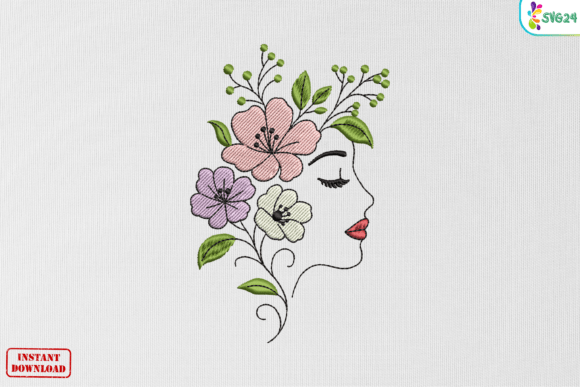
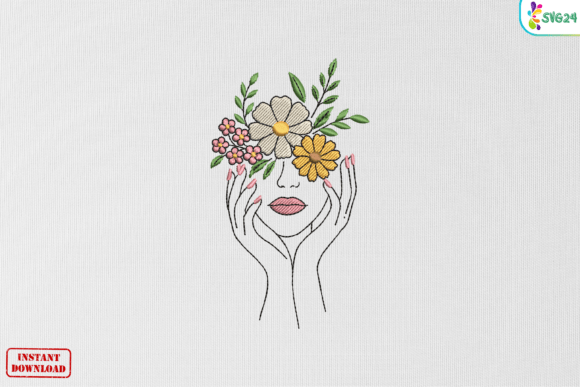
At first glance, Blooming Floral Lady Portrait Charm reads as quietly luxurious—not loud or trendy, but deeply intentional. It lands squarely in the Boho aesthetic: soft curves, organic flow, and layered botanical detail without clutter. This isn’t a “cute” or “funny” design—it’s elegant, with a gentle, handmade gravitas that signals quality before a customer even touches the fabric. For craft fair buyers scanning your booth at 10 a.m. on a crowded Saturday, that tone matters more than you think. It draws in shoppers who value intention over impulse, and it positions your handmade product as collectible—not disposable.
Where It Shines: Craft Fair & Market Product Pairings
Blooming Floral Lady Portrait Charm thrives where elegance meets utility—and where customers pause to admire detail. On a heavyweight canvas tote bag? Absolutely. The portrait anchors the front panel beautifully—neither overwhelming nor shrinking into background noise. As an apron embroidery centered just below the pocket? It adds heirloom charm without competing with function. On a linen tea towel? Yes—but place it high near the top hem, not centered, so the botanical leaves drape naturally down the fold line. That subtle asymmetry invites closer looking.
As an embroidered patch, this design sings. Its balanced composition (face + florals + negative space) holds up cleanly at 3–4 inches wide—ideal for attaching to denim jackets, market bags, or pouches. On a small fabric pouch or pillow cover? Use it as a focal point—not a border. Avoid stretching it across curved surfaces like caps unless you’ve tested stitch behavior on knit fabric; the delicate facial features and fine stems may distort.
What Makes It Sell: Attention, Value, and Booth Impact
In person, Blooming Floral Lady Portrait Charm earns attention because it feels *designed*, not assembled. Customers notice the thoughtful layering—the way petals nestle behind earlines, how leaves curl around jaw contours. That perceived craftsmanship lifts perceived value instantly. At a craft fair, where dozens of booths offer floral motifs, this one stands out by prioritizing *portrait intimacy* over generic blooms. It feels personal, almost like a quiet story stitched in thread.
For Etsy sellers and small shop owners, it strengthens brand consistency—especially if your shop leans into romantic, nature-infused, or slow-craft energy. It also performs well in printable mockups: clean lines, moderate contrast, and graceful negative space translate crisply to digital listings. And yes—it photographs beautifully under natural light, especially on oat, sage, or ivory fabrics that let the thread colors breathe.
Production Reality Check: What You Must Test Before Booth Day
Don’t assume this design is “easy.” Its beauty lives in nuance—and nuance demands testing. Here’s what I check every time:
- Stitch density around the lady’s hairline and floral centers—dense areas can pucker lightweight cotton or overwhelm textured tea towels.
- Clarity at smaller sizes: Below 2.5 inches wide, tiny stamen details and leaf veins blur. Reserve Blooming Floral Lady Portrait Charm for medium-to-large applications unless your machine embroidery design includes a simplified alternate version.
- Fabric texture: Avoid heavy terry cloth or thick denim without extra stabilizer support—the delicate curves need stability to hold shape.
- Dark fabric contrast: If stitching on charcoal or navy, confirm your thread colors include enough tonal variation (e.g., cream stem + rose petal + taupe leaf) to retain dimension. Flat monochrome won’t read.
- Hoop size and placement: The portrait’s vertical orientation means standard 4x4 hoops may require re-hooping for full coverage—plan for that in your batch workflow.
Smart Workflow Moves for Sellers & Designers
Before cutting your first production run, do this:
- Run a test on scrap fabric matching your final product (e.g., unbleached linen for tea towels, midweight twill for aprons).
- Compare thread contrast on 2–3 fabric colors—you’ll likely discover one combo (like dusty rose thread on oat linen) that makes the design *pop* in person, even if it’s subtler online.
- Review spacing between elements: Are flowers too close to the edge? Does the face feel balanced within the frame? Adjust digitally *before* stitching.
- Create at least one real-world mockup—a finished embroidered tote or pillow—and photograph it in daylight, not studio lighting. That’s your truest preview of booth impact.
- Confirm commercial licensing status. If you’re selling finished products (not just the digital embroidery file), verify the embroidery file permits commercial embroidery use—many “personal use only” files don’t.
Final Thought: A Quiet Anchor for Your Collection
Blooming Floral Lady Portrait Charm isn’t a flash-in-the-pan trend piece. It’s a quiet anchor—elegant enough for bridal markets, grounded enough for farmhouse boutiques, and distinctive enough to build recognition across your handmade product line. It works hardest when treated with intention: placed thoughtfully, stitched carefully, and photographed honestly. For craft fair sellers, Etsy sellers, and boutique makers, it’s less about “what it is” and more about “what it says about your standards.” When customers see that level of care reflected in every petal and contour, they don’t just buy a tote—they invest in your craft. And that’s the kind of sale that brings them back next season.