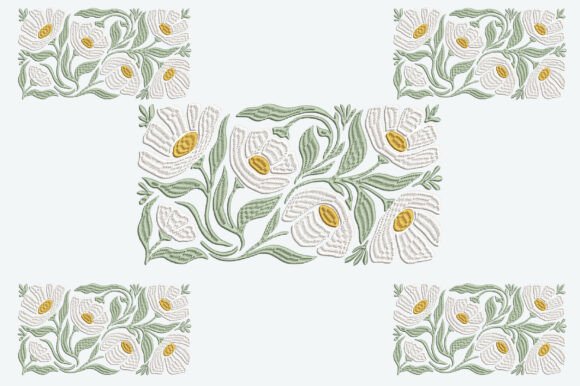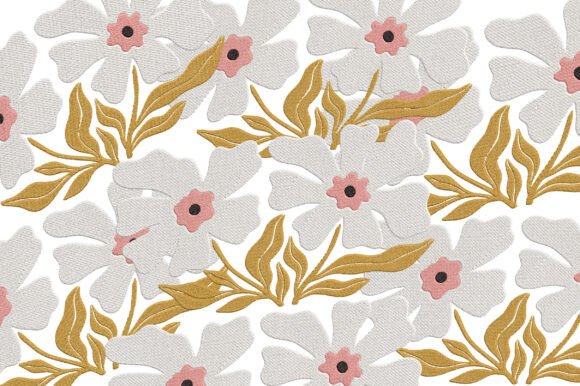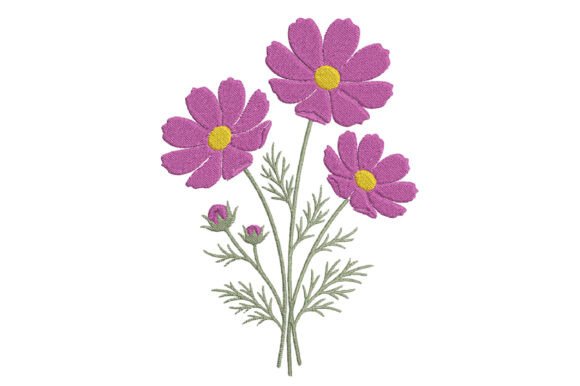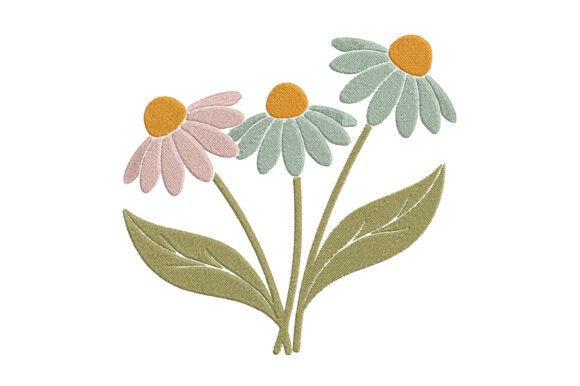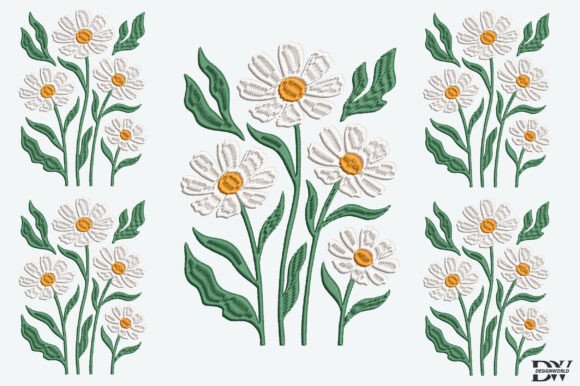
White Flowers Embroidery Design
A Timeless Botanical Asset for Small Business Branding
As an embroidery designer who’s developed hundreds of commercial embroidery files for cafés, boutiques, florists, bakeries, and handmade brands, I approach every new design with two questions: “Does it strengthen brand identity?” and “Will it hold up in real-world production?” The White Flowers Embroidery Design immediately stands out—not as a generic floral motif, but as a refined, intentional machine embroidery design rooted in the Single Flowers Plants category. Its description—“delicate white blooms and graceful botanical details”—signals elegance over ornamentation. That’s critical when your embroidery file becomes a chest logo on staff aprons, a woven patch on tote bags, or a subtle sleeve accent on custom apparel.
First Impression: Elegant, Approachable, Professionally Handmade
There’s no clutter here. No forced symmetry or overly stylized petals. The White Flowers Embroidery Design reads as quietly confident—classic enough for a heritage bakery, modern enough for a wellness studio, and soft enough for a pet brand focused on gentle care. It avoids looking “crafty” in a DIY sense; instead, it conveys intentionality and attention to detail. That nuance matters. When customers see this design stitched onto a café apron or embroidered patch on a reusable tote, they register professionalism—not just decoration. For small business merch, that perception directly supports trust, perceived value, and visual consistency across touchpoints.
Real-World Performance Across Merchandise Types
In my studio, I test every embroidery file across six high-use applications before recommending it to clients: embroidered patches, cap embroidery, apron embroidery, tote bag design, uniform work shirts, and product packaging accents. Here’s how the White Flowers Embroidery Design performs:
- Embroidered patches: Works beautifully at 2.5"–3.5" width—petals retain shape without excessive stitch density. Ideal for iron-on or sew-on branding on boutique merchandise or event merch.
- Cap embroidery: Holds clarity on curved fronts when digitized with appropriate underlay and reduced fill density. Avoid placing near the bill seam unless tested first.
- Apron embroidery: Shines on natural fibers like cotton duck or linen blends. The delicate lines read cleanly against textured fabric—no bleeding or distortion if proper stabilizer is used.
- Tote bag design: Scales well from 3" to 5". Looks premium on heavyweight canvas and maintains legibility even after repeated washing—provided thread colors contrast sufficiently with base fabric.
- Uniforms & work shirts: Functions as both a subtle chest logo and a refined sleeve detail. Its botanical grace reinforces brand personality without competing with text-based logos.
- Product packaging accents: Excellent for stitching onto fabric tags, gift wrap bands, or branded pouches—enhancing unboxing moments for Etsy sellers and handmade product lines.
Where to Use With Intention—Not Assumption
This isn’t a one-size-fits-all embroidery file. Its elegance comes with practical boundaries. Avoid using the White Flowers Embroidery Design below 1.75" without verifying clarity in a physical test stitch. On dark uniforms, confirm thread color contrast—white thread may require a light underlay or alternate off-white tone for visibility. On highly textured fabrics (like burlap or thick terry), reduce fill density and increase stabilizer weight to prevent puckering. And never assume it works on curved surfaces like cap fronts or rounded tote handles—always run a printable mockup and physical sample first.
How It Strengthens Your Brand Identity
Small businesses don’t just sell products—they sell feeling. A florist using the White Flowers Embroidery Design on staff aprons signals care and freshness. A local bakery applying it to tote bags evokes artisanal charm without cliché. That’s because this embroidery design doesn’t shout—it invites. It builds recognition through repetition: same delicate bloom on a cap, a patch, and a product label creates cohesive visual rhythm. Customers begin associating those graceful botanical details with your brand’s values—thoughtfulness, authenticity, quiet confidence. That consistency elevates perceived quality and supports buyer engagement far more than a flashy, trend-driven motif ever could.
Practical Designer Notes Before You Stitch
Before committing this White Flowers Embroidery Design to production, follow these field-tested steps:
- Test it in black and white first—verify contrast and balance without color distraction.
- Check performance at your smallest intended patch size—does stem definition hold? Do petals separate cleanly?
- Review thread color options: white, ivory, soft grey, or ecru often enhance elegance better than stark white on natural fabrics.
- Inspect spacing between elements—tight loops or overlapping stems can cause nesting or thread breaks at scale.
- Confirm hoop size compatibility with your embroidery machines—some botanical layouts require larger hoops for smooth hooping.
- Always test on your actual fabric—especially for aprons, caps, or totes—with correct stabilizer type and weight.
- Create a printable mockup for client approval—include context (e.g., stitched on a navy cap front or cream tote).
- Compare it beside your other design assets—is it tonally aligned? Does it complement, not compete with, your primary logo?
- Verify commercial licensing—this digital embroidery file must be cleared for resale, branded merchandise, and commercial embroidery use before distribution.
The White Flowers Embroidery Design isn’t just another floral pattern. It’s a versatile, brand-forward machine embroidery design built for longevity—not trends. Whether you’re an embroidery shop digitizing for local businesses, an Etsy seller launching handmade product lines, or a creative studio building cohesive merch systems, this design earns its place in your core design assets. Used thoughtfully, it transforms simple fabric into meaningful brand expression—one delicate, enduring bloom at a time.